Introduction:
For over a decade, Salesforce has helped organizations centralize customer data, automate workflows, and improve visibility across sales, service, and marketing. But despite these advances, most CRM systems still rely heavily on human-triggered actions. A rep updates a record. An agent clicks a button. A manager runs a report.
According to Salesforce ecosystem surveys, more than 60% of admins spend the majority of their time maintaining automation rather than optimizing outcomes. The issue isn’t a lack of tools—it’s the absence of intelligence that can act instead of simply respond. This is where Salesforce Agentforce fundamentally changes the game.
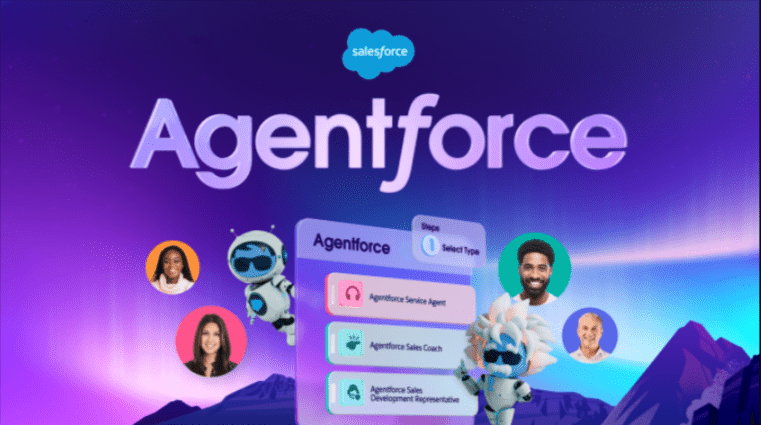
Agentforce introduces a new CRM operating model: AI-powered autonomous agents that reason, decide, and execute tasks across Salesforce without constant human intervention. Instead of building endless flows for every edge case, teams can now deploy agents that understand intent, context, and data—then take the next best action automatically.
For example:
- A service agent that doesn’t just suggest a response, but resolves a case end-to-end
- A sales agent who proactively updates opportunities, schedules follow-ups, and alerts reps
- A compliance agent that monitors activity and flags violations in real time
At Twopir Consulting, we see Agentforce not as another AI feature, but as the foundation of autonomous CRM. In this guide, we’ll break down what Agentforce is, how it works technically, why it matters, and how organizations can implement it responsibly to unlock real business value.
What Is Salesforce Agentforce?
Salesforce Agentforce is a next-generation AI framework designed to power autonomous agents within the Salesforce ecosystem. Unlike traditional automation or assistive AI, Agentforce enables AI agents to observe data, reason through context, make decisions, and take action across Sales, Service, and Industry Clouds.
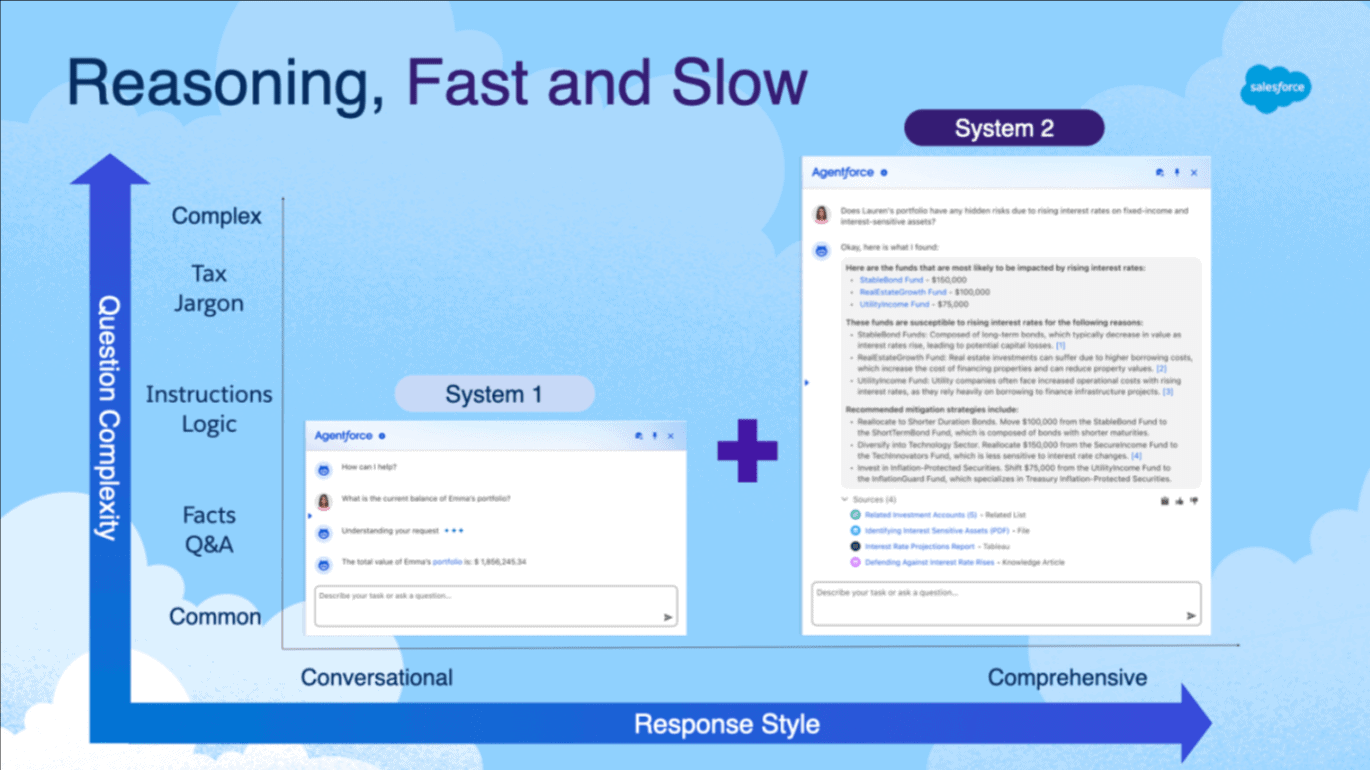
Built on Salesforce Einstein, Data Cloud, and the trusted Salesforce Platform, Agentforce allows organizations to move beyond static workflows into intent-driven, outcome-based automation. These agents can work independently or alongside users, executing tasks such as updating records, resolving cases, triggering follow-ups, or enforcing compliance rules—all while respecting Salesforce security and governance.
In simple terms, Agentforce transforms Salesforce from a system that supports users into one that can act on their behalf.
Core Components:
1. Agent Runtime & Reasoning Engine:
At the heart of Agentforce is a reasoning layer powered by Einstein and large language models (LLMs). This layer evaluates:
- User intent (from chat, voice, or events)
- CRM context (records, relationships, history)
- Business rules and guardrails
The agent doesn’t just retrieve data—it determines what should happen next.
2. Action Layer (Flows, Apex, APIs):
Agents execute decisions through:
- Salesforce Flow for declarative automation
- Apex for complex logic and integrations
- REST / Composite APIs for cross-system actions
Example: An agent identifies a stalled deal and triggers a Flow to assign tasks, update the stage, and notify the owner.
3. Data & Context Layer (Data Cloud + CRM):
Agentforce pulls real-time context from:
- Salesforce core objects
- Data Cloud unified profiles
- External systems via MuleSoft or APIs
This ensures decisions are based on complete, current data.
Agentforce Architecture: How It Works End-to-End
Salesforce Agentforce follows a structured, secure, and intelligent execution model. Each step ensures the AI agent acts with full context, follows business rules, and delivers measurable outcomes—without compromising governance or trust.
1: Signal Intake – How Agentforce Gets Triggered
Every Agentforce interaction begins with a signal, which tells the agent that action may be required. These signals can come from multiple sources inside Salesforce:
- User input: A sales rep, service agent, or advisor interacts with Agentforce through chat, the Salesforce Console, or embedded UI components. For example, a user might ask, “Follow up with this customer”.
- System events: Changes in Salesforce records—such as a case status update, opportunity stage change, or SLA breach—can automatically trigger an agent.
- Time-based conditions: Scheduled triggers, such as overdue follow-ups, renewal dates, or inactive leads, can activate the agent without human involvement.
This multi-channel trigger model ensures Agentforce can respond both reactively and proactively, enabling always-on automation.
2: Context Assembly – Building a 360° View
Once triggered, Agentforce assembles a complete operational context before taking action. This prevents shallow or incorrect decisions.
The agent gathers:
- Primary record data (e.g., Opportunity, Case, Account)
- Related objects such as Contacts, Activities, Assets, or Contracts
- Historical activity, including emails, calls, past actions, and case resolutions
- Unified customer profiles from Data Cloud, combining CRM and external data sources
By consolidating structured and historical data, Agentforce understands who the customer is, what has happened before, and what matters now—all in real time.
3: Reasoning & Decisioning – Intelligent Evaluation
With full context in place, the AI agent moves into reasoning mode. This is where Agentforce goes beyond traditional automation.
The agent evaluates:
- Business rules (company policies, SLAs, approval requirements)
- User permissions and data access controls
- Risk thresholds such as financial limits, compliance exposure, or customer sensitivity
Using this information, Agentforce determines the next best action, such as whether to proceed automatically, escalate, or request human approval. This ensures decisions are context-aware, compliant, and outcome-driven.
4: Action Execution – Turning Decisions into Outcomes
After deciding what to do, Agentforce executes actions using Salesforce-native and external tools:
- Flow for orchestrating multi-step processes (task creation, record updates, notifications)
- Apex for complex logic, validations, or custom integrations
- External APIs (via MuleSoft or REST APIs) to interact with ERP, billing, or third-party systems
Because Agentforce uses trusted Salesforce execution layers, actions are secure, scalable, and consistent with existing automation standards.
5: Governance & Learning – Trust, Control, and Improvement
Every Agentforce action is:
- Logged and auditable for compliance and reporting
- Traceable to the triggering signal and decision logic
- Reviewable by admins and stakeholders
These logs also enable feedback loops, allowing organizations to refine prompts, rules, and guardrails over time. As agents learn from outcomes, performance continuously improves—without sacrificing control.
Why Salesforce Agentforce Matters in Modern CRM?
Salesforce Agentforce matters in modern CRM by moving beyond traditional systems with autonomous, AI-powered agents that automate complex tasks, boost human agent efficiency, and provide proactive, personalized customer experiences across the entire Salesforce ecosystem, enabling true digital workforce scaling and deeper data-driven actions for better outcomes and faster service.
From Rule-Based Automation to Autonomous AI Agents:
Traditional CRM automation relies on workflow rules, process builders, and flows that execute predefined “if-this-then-that” logic. While powerful, these tools require constant maintenance and cannot adapt dynamically to changing scenarios.
Agentforce introduces a shift from instruction-based automation to goal-based execution. Instead of defining every possible rule, organizations define objectives and guardrails, and AI agents determine how to achieve them
This evolution reduces automation sprawl, lowers admin overhead, and enables Salesforce to operate intelligently at scale—especially in fast-moving or data-heavy environments.
Business Problems Agentforce Solves:
Salesforce Agentforce directly addresses several common enterprise challenges:
- Manual follow-ups are slowing down sales cycles
- High support volumes overwhelming service teams
- Inconsistent customer experiences across channels
- Compliance risks due to human error
- CRM adoption issues caused by excessive clicks and updates
By allowing AI agents to take ownership of routine and complex tasks, Agentforce helps organizations increase efficiency, accuracy, and responsiveness without increasing headcount.
Key Benefits of Salesforce Agentforce:
1. Autonomous Case Resolution:
Salesforce Agentforce enables AI agents to automatically resolve cases by invoking Salesforce Flows and Apex logic without human intervention. These agents analyze case context, determine the right resolution path, and execute actions such as updates, notifications, or closures. As a result, support teams experience significantly faster resolution times and reduced operational costs, with organizations reporting up to a 35% reduction in average handle time.
2. Proactive Sales Execution:
Agentforce continuously monitors opportunity signals such as inactivity, deal stage changes, and customer engagement patterns in real time. Based on these insights, agents trigger follow-ups, update opportunity stages, or notify sales reps before deals stall. This proactive execution helps sales teams stay ahead of risks and opportunities, leading to higher win rates and a 25% improvement in pipeline velocity through timely engagement.
3. Real-Time Intelligence:
By leveraging Salesforce Data Cloud as its grounding layer, Agentforce ensures decisions are based on the most current and unified customer data. Agents evaluate real-time signals across CRM and external sources, reducing dependency on delayed reports or manual checks. This results in more accurate decisions, fewer errors, and improved responsiveness across sales and service operations.
4. Reduced Admin Overhead:
Traditional automation requires maintaining dozens of rigid, rule-based flows for every scenario. Agentforce replaces this complexity with intent-driven logic, allowing agents to adapt dynamically based on context. This significantly reduces flow sprawl and ongoing maintenance, enabling Salesforce admins to focus on strategic optimization rather than constant automation upkeep.
5. Built-In Governance:
Agentforce is designed with enterprise-grade governance controls, including permission sets, approval checkpoints, and detailed audit logs. These guardrails ensure agents operate within defined boundaries while maintaining full transparency and compliance. This makes Agentforce suitable for regulated industries and accelerates safe, scalable AI adoption across the organization.
6. Scalable Across Clouds:
Agentforce operates seamlessly across Salesforce clouds such as Sales Cloud, Service Cloud, Financial Services Cloud, and Marketing Cloud. A single agent framework can support multiple business functions without duplicating logic or integrations. This unified AI layer enables organizations to scale automation consistently while maximizing return on their Salesforce investment.
7. Faster Time to Value:
With a declarative-first configuration approach, Agentforce allows teams to build and deploy intelligent agents without heavy custom development. Admins and architects can quickly design agent behaviors using Flows and prebuilt actions, reducing implementation cycles from months to weeks. This faster deployment ensures businesses realize value from AI-driven automation much sooner.
Practical Must-Use Features:
1: Agent + Flow Orchestration:
Agentforce, combined with Salesforce Flow, enables agents to manage end-to-end case handling without manual intervention. The agent evaluates case context, priority, and SLA, then triggers the appropriate Flow to route, update, or resolve the case automatically. This reduces agent workload and speeds up resolution. To avoid over-automation, high-risk actions should always include a human-in-the-loop approval step.
2: Apex Actions for Complex Logic:
Apex actions allow Agentforce to execute advanced business logic that goes beyond declarative automation. For example, when an opportunity amount exceeds a defined threshold, Apex can trigger approval workflows or compliance checks automatically. This ensures precise control over critical decisions. Best practice is to keep Apex logic atomic, well-documented, and fully auditable for governance and scalability.
3: Data Cloud Grounding:
Data Cloud grounding provides Agentforce with a unified, real-time view of customer data across multiple systems. By leveraging 360° customer profiles, agents make accurate, context-aware decisions rather than relying on fragmented CRM data. This significantly improves personalization and decision quality. Regular data refresh schedules are essential to maintain data accuracy and prevent outdated insights.
Real-World Use Cases:
1. Financial Services (Wealth Management):
Industry – Financial Services:
Wealth management firms operate in highly regulated environments where client data accuracy, timely follow-ups, and compliance are critical to maintaining trust and meeting regulatory standards.
Challenge – Manual follow-ups, compliance risk:
Advisors spent significant time on manual client follow-ups and suitability checks, increasing operational overhead and the risk of missed compliance requirements.
Solution:
An Agentforce-powered advisor assistant was deployed, integrated with Financial Services Cloud (FSC) and Data Cloud to provide a unified client view and automate suitability validations in real time.
Results:
The firm achieved a 40% reduction in administrative workload for advisors and accelerated compliance reviews by 90%, significantly improving efficiency and regulatory confidence.
2. Healthcare Provider Network:
Industry – Healthcare:
Healthcare provider networks must manage high volumes of patient service requests while strictly adhering to SLAs and HIPAA data protection regulations.
Challenge – SLA breaches and HIPAA concerns:
Manual case handling led to delayed responses, SLA violations, and increased risk of unauthorized access to sensitive patient information.
Solution:
A Service Agentforce solution was implemented with sentiment analysis to prioritize urgent cases, secure Flow-based automation for actions, and human approval checkpoints for sensitive updates.
Results:
The organization reduced case resolution time by 30% while maintaining zero compliance violations, ensuring faster patient service without compromising data security.
Conclusion:
Salesforce Agentforce represents a fundamental shift—from CRM as a system of record to CRM as a system of action. By embedding autonomous intelligence directly into Salesforce, organizations can finally move beyond reactive workflows and unlock proactive, self-driving operations.
Throughout this guide, we’ve seen how Agentforce:
- Combines AI reasoning with Salesforce-native automation
- Solves long-standing CRM scalability and efficiency gaps
- Delivers measurable business outcomes across industries
The key to success is intentional adoption. Start small. Deploy one agent. Test it in a sandbox. Add guardrails. Measure results. Then scale.
At Twopir Consulting, our strategic recommendation is clear: Treat Agentforce as a platform capability, not a feature. When paired with strong data foundations, governance, and domain expertise, it becomes the backbone of AI-powered CRM automation.
The future of CRM isn’t more dashboards or more clicks—it’s autonomous agents working alongside humans to deliver better outcomes. And that future has already arrived with Salesforce Agentforce.