
Salesforce Consumer Goods Cloud: A Comprehensive Overview for 2026
What Consumer Goods Cloud does for key accounts, trade promotions, store visits and service; what it costs by edition; what Agentforce and the Winter '27 release changed; and how to implement it without the usual rework.
Key Takeaways
- Salesforce Consumer Goods Cloud is Salesforce's industry CRM for brands that sell through retailers and distributors: key account planning, trade promotion management, retail execution and service on one platform.
- It includes the core of Sales Cloud and Service Cloud, so you do not buy those separately. Salesforce now also markets it as Agentforce Consumer Goods.
- List prices run from US$100 per user per month for merchandisers to US$700 for Max editions; Trade Promotion Management is quoted separately.
- Winter '27 moves Retail Execution onto standard Salesforce Platform objects, and Penny Perfect Pricing V1 has been retired for V2: check both before you design.
- Projects succeed when the store, product and ERP data are designed first and AI is switched on last.
What is Salesforce Consumer Goods Cloud? It is Salesforce's CRM for consumer goods companies. It connects the people who plan with retailers, the reps who visit stores, the teams who run trade promotions and the agents who take orders, on one data model built for stores, visits, products and promotions.
We first published this overview in 2024. This version is rebuilt from Salesforce's current product, pricing and developer documentation and its release notes up to Winter '27, checked in October 2026. It adds who the product fits, the data model, Agentforce, editions and pricing, recent releases and an implementation plan, and it replaces the Winter '21 update list.
What Is Salesforce Consumer Goods Cloud?
Salesforce Consumer Goods Cloud is Salesforce's industry CRM for brands that sell through retailers and distributors. It adds a consumer goods data model, retail execution, trade promotion management, key account planning and service tools to the Salesforce Platform, so account teams, field reps and service agents plan and execute on one connected system.
Salesforce launched it in September 2019 as a product built on the core Salesforce platform. Its product page now describes one platform that brings account teams and AI agents together across sales planning, trade management, distributor operations, field execution and customer service. You do not need to buy Sales Cloud or Service Cloud separately: Salesforce says Consumer Goods Cloud includes "the best of Sales Cloud and/or Service Cloud" plus its extended data model.
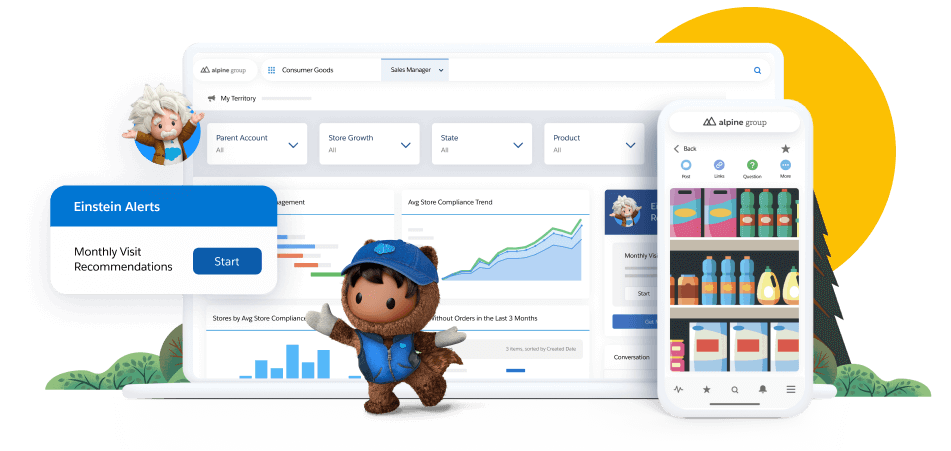
Is it now called Agentforce Consumer Goods?
Partly. The US product page and the release notes still say Consumer Goods Cloud, while Salesforce's consumer goods industry page and Trailhead's Retail Execution module now use "Agentforce Consumer Goods". They are the same product. In this guide we use Consumer Goods Cloud, the name in the release notes, and we use Data 360 for the product formerly called Data Cloud.
Salesforce also reports multi-year best-in-class recognition from the Promotion Optimization Institute (POI). Its own pages count the years differently, so the most precise dated result is this: in the 2023 POI Enterprise Planning Vendor Panorama, Salesforce's trade promotion management received three Best-in-Class distinctions.
Who Is Consumer Goods Cloud Built For?
It fits consumer packaged goods, beverage, food, health and beauty, and other branded-product companies that sell to stores through key accounts, distributors and field teams. The value grows with the number of store visits, retailer accounts and trade promotions you manage. A brand that sells mostly direct to consumers online needs commerce and marketing tools first.
| Team | What they do in Consumer Goods Cloud |
|---|---|
| Key account managers | Customer business plans with volume, cost, baseline and target planning; account scenario planning; forecasting |
| Trade marketing and finance | Trade calendars, funds and budgets, promotion planning, claims and accruals, post-event analysis |
| Field sales and merchandisers | Planned store visits, audits and surveys, planogram checks, order capture on an offline mobile app |
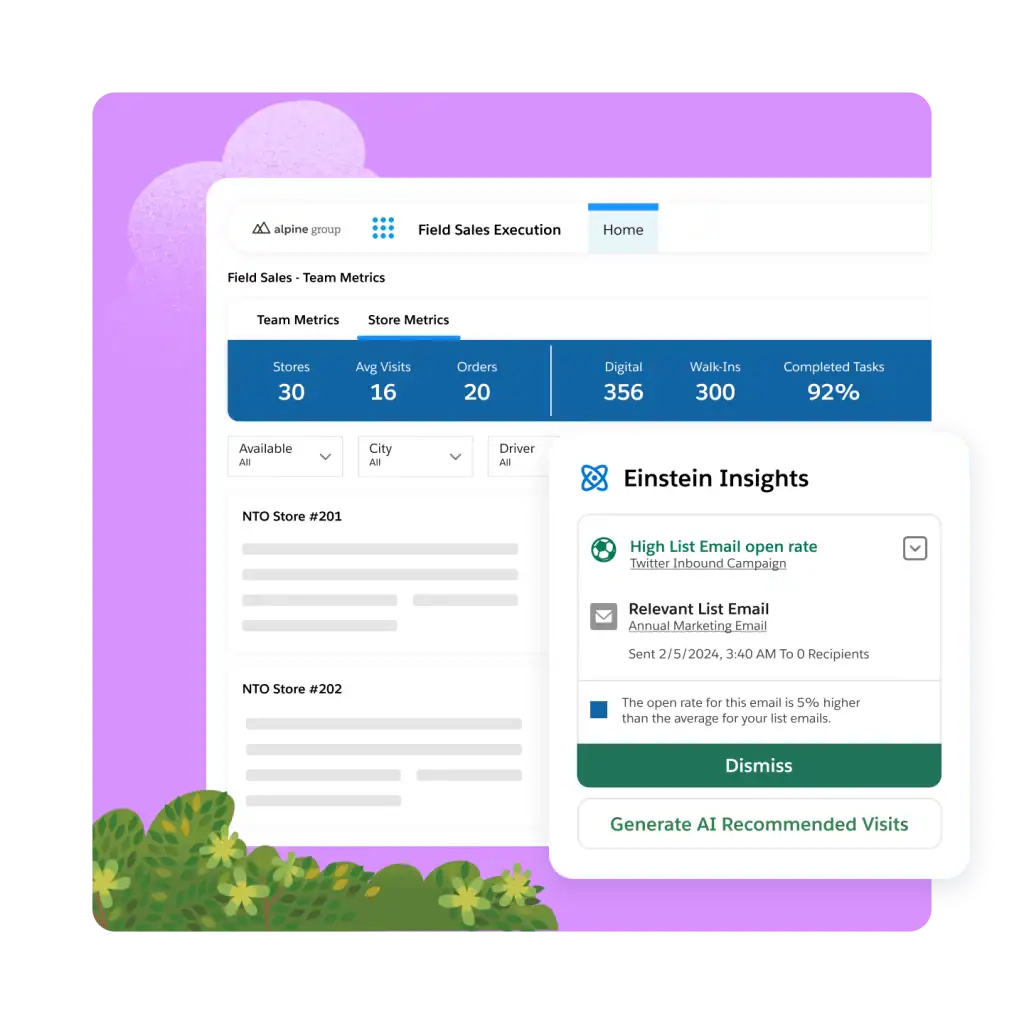
| Sales and field managers | Territory and store KPIs, visit recommendations, routing, real-time reporting |
| Service and telesales agents | Store and order history in one console, case routing, orders taken by phone with promotion-aware pricing |
A strong fit when you run regular store visits, negotiate annual plans with retailers, spend a material share of revenue on trade promotions, or sell through distributors whose orders and stock you need to see.
Think twice when your sales are mostly online and direct to consumer, your field team is small and does not visit stores, or you only need opportunity tracking. Standard Sales Cloud, or a commerce platform, may cover you at lower cost.
What Can You Do with Consumer Goods Cloud?
Salesforce groups the product into five capability areas: account and sales productivity, account planning, trade promotion effectiveness, retail execution, and customer service. Each area serves a different team, and most companies start with one or two of them. The next four sections explain each area in depth.
Grow accounts and sales productivity
Sales Planning Agent, Advanced Forecasting and Sales Agreements, on top of standard accounts, opportunities, activities and dashboards.
Optimize account planning
Customer Business Planning with granular unified data and real-time reporting by region, customer or SKU.
Improve trade promotion effectiveness
Trade Promotion Management Agent, accruals management, the trade planning calendar and promotion effectiveness analytics.
Unlock perfect retail execution
Distributor management, visit execution, the offline mobile app and the AI Visit Assistant.
Grow customer satisfaction and revenue
Asset Service Agent, asset service management and Omni-Channel case routing.
Add AI and data
Agentforce for Consumer Goods, Data 360, MuleSoft for Consumer Goods and Omnistudio are listed as related products.
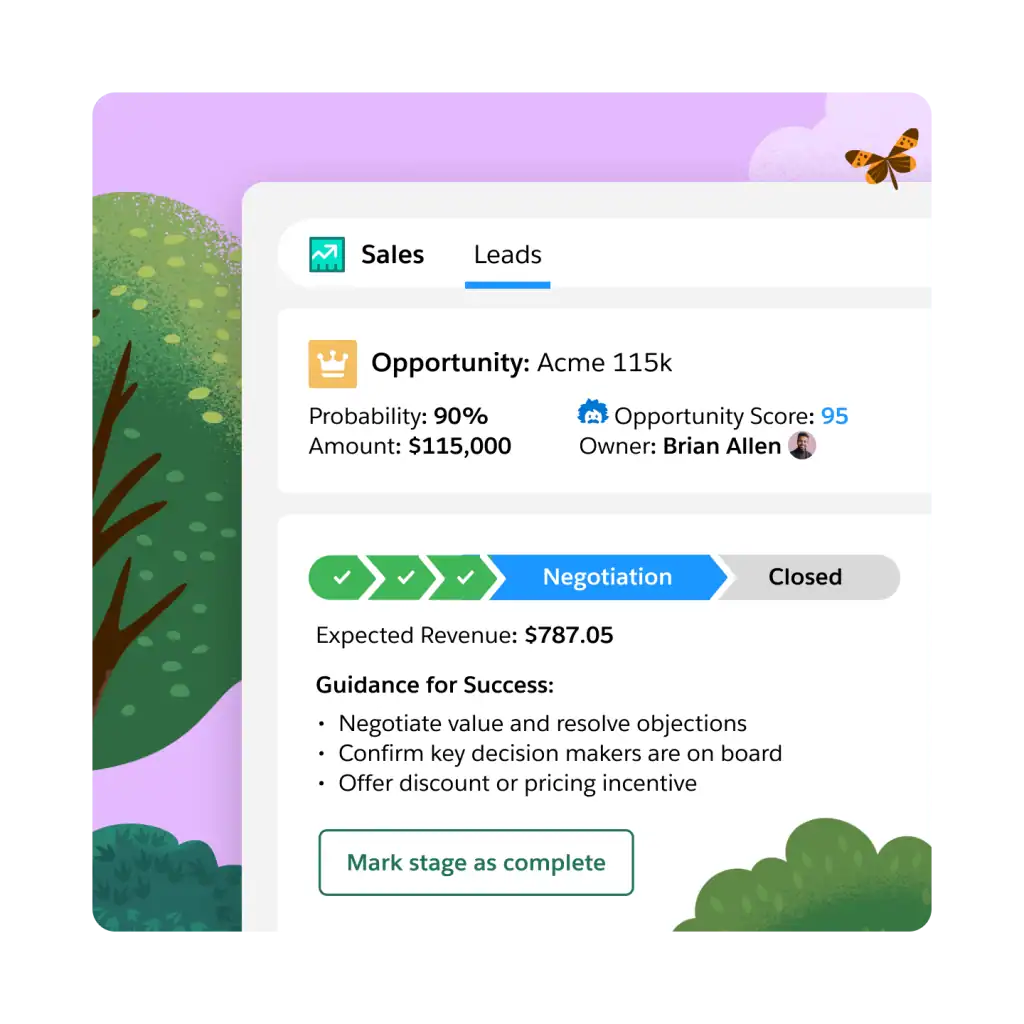
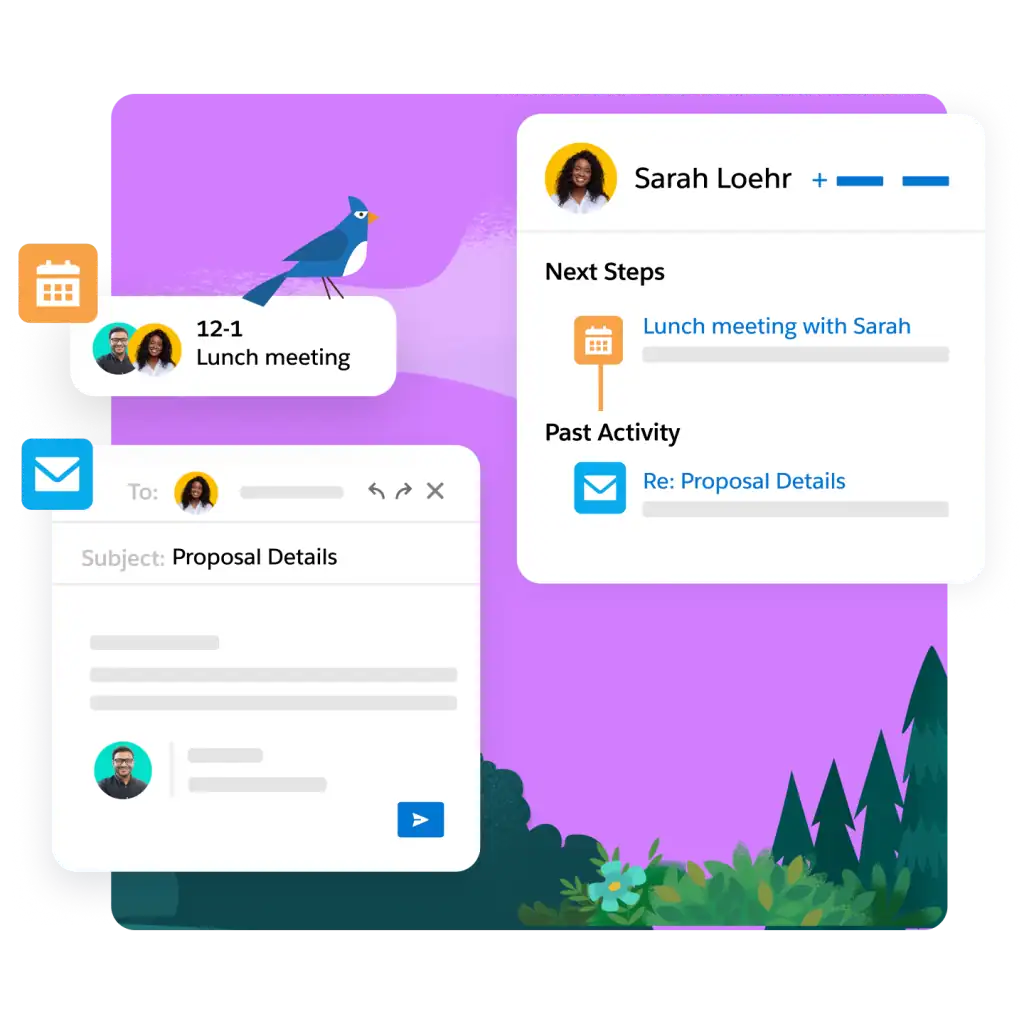
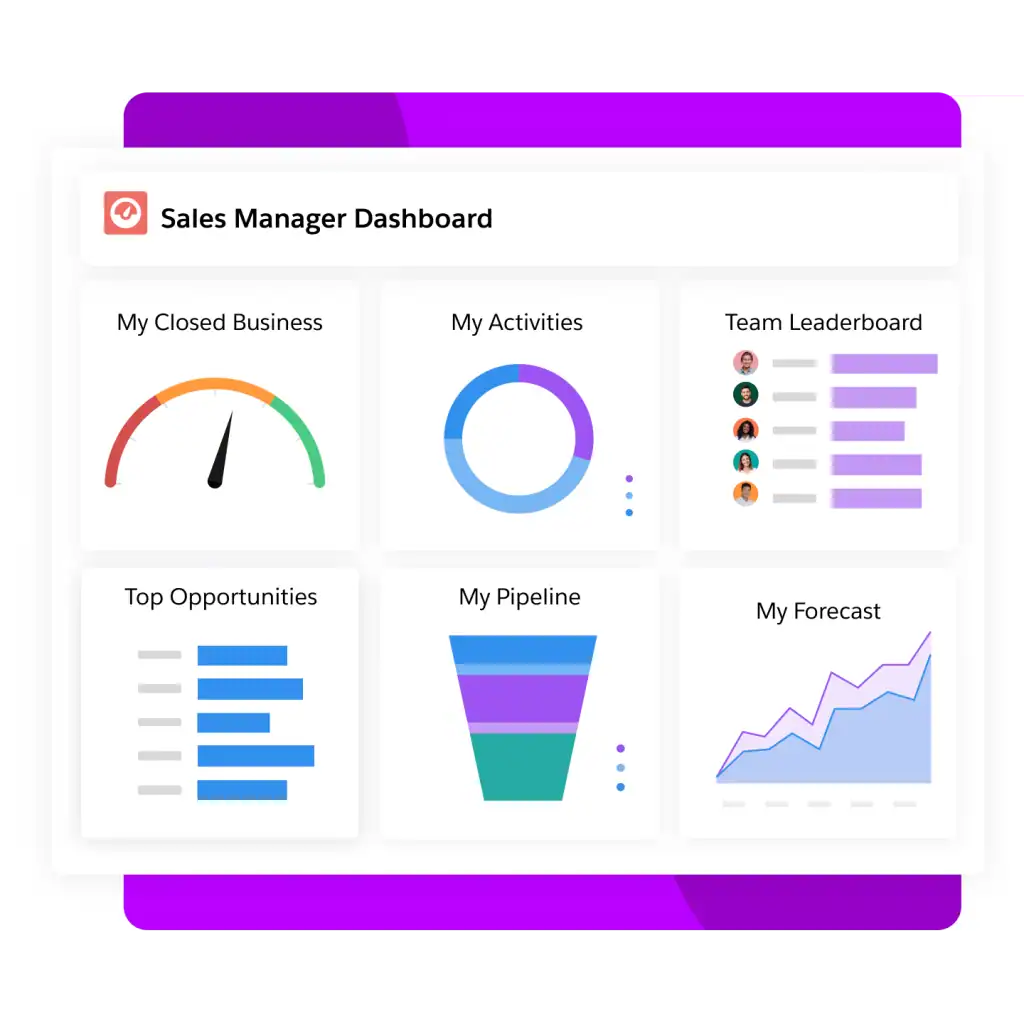
The capability names above are taken from the Consumer Goods Cloud product page as listed in October 2026. The sales area also inherits everyday Sales Cloud tools: opportunity guidance, activity capture from email and calendars, and dashboards.
How Does Retail Execution Work in Consumer Goods Cloud?
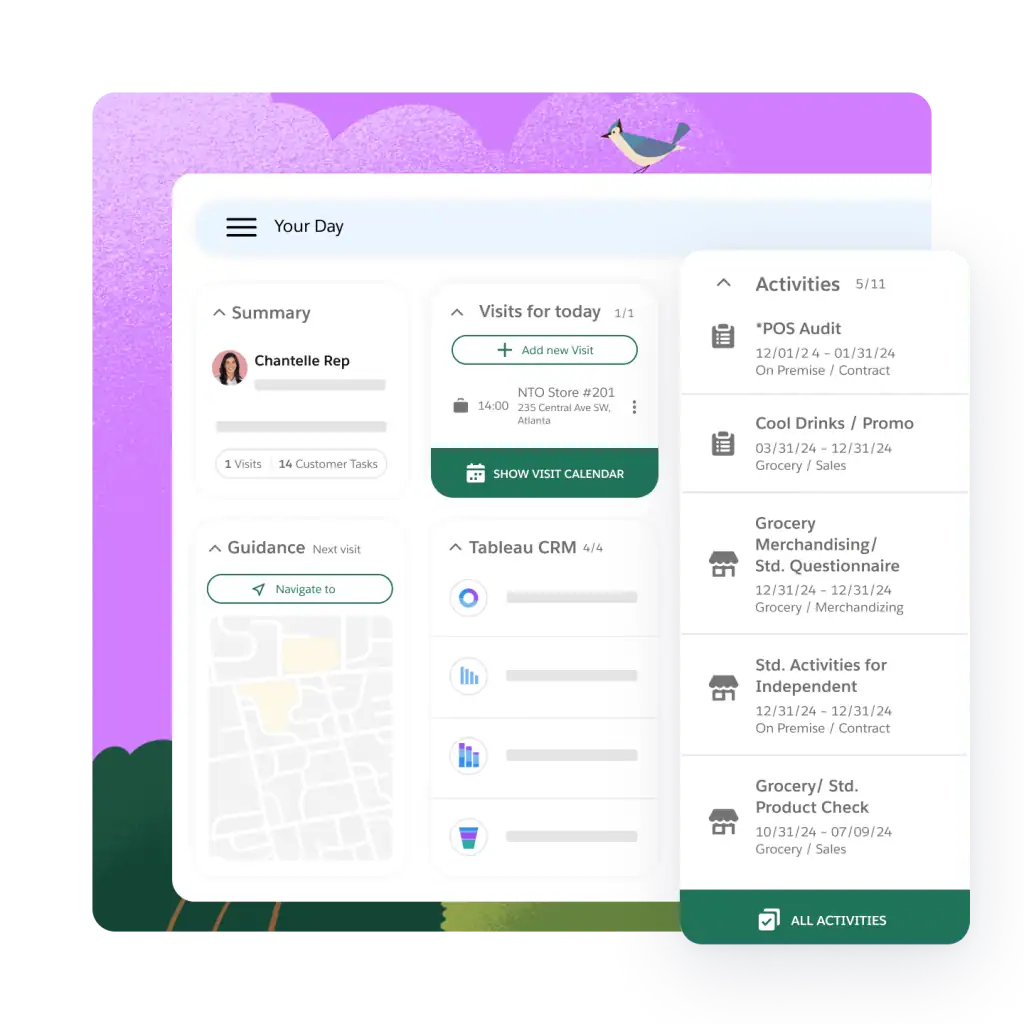
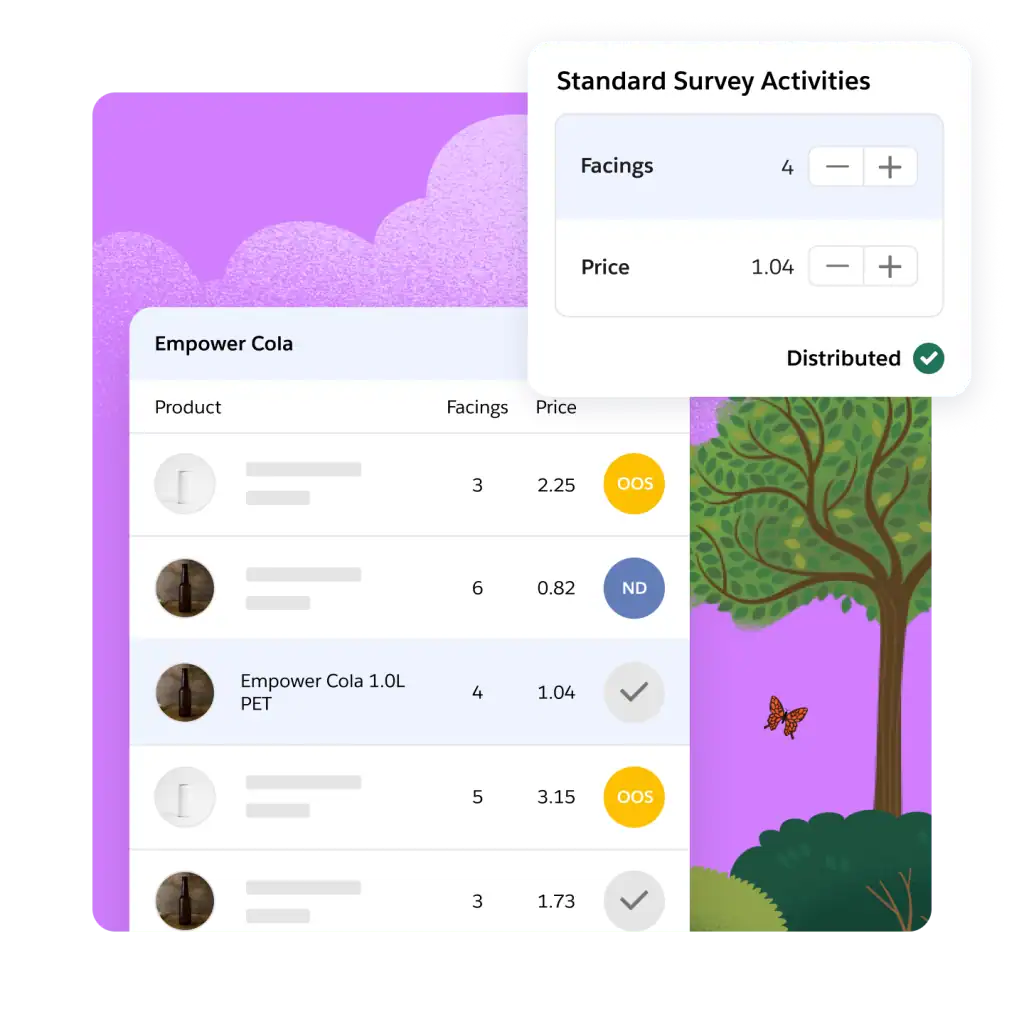
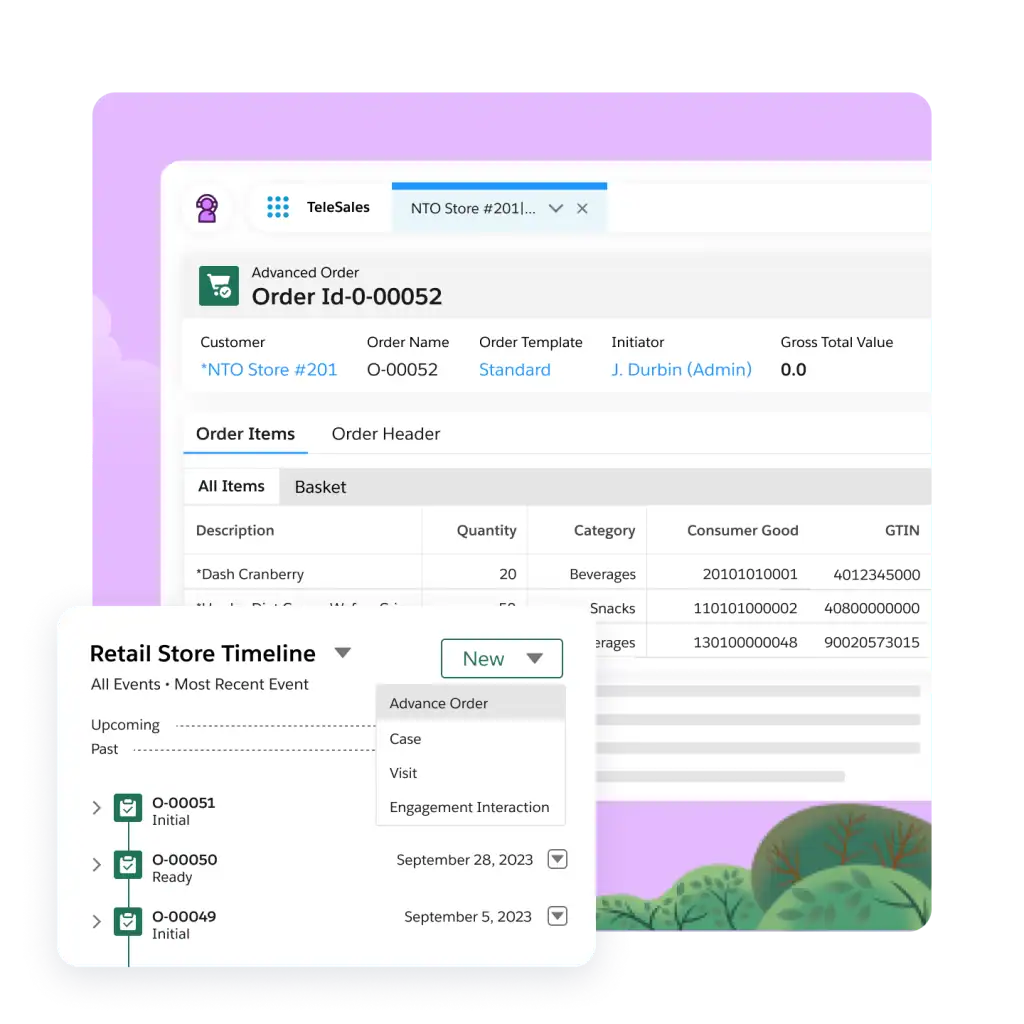
Retail Execution lets managers plan store visits and lets reps carry them out on a mobile app that works offline. A visit holds the tasks to complete in a store, such as planogram, inventory and promotion checks or surveys. The results flow back as store KPIs that guide the next visit and the next order.
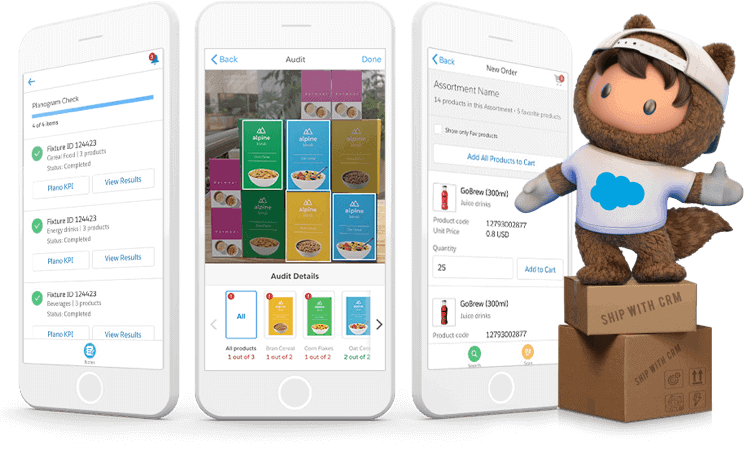
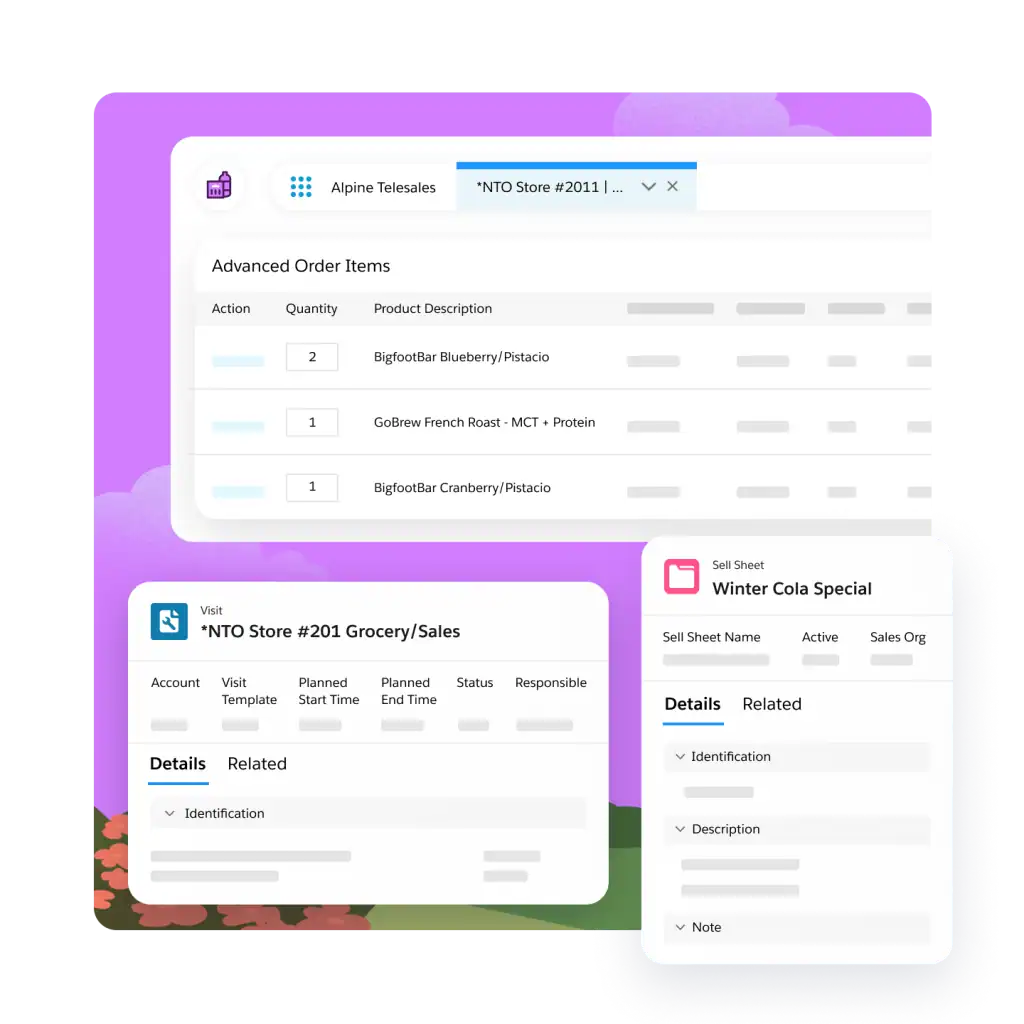
Salesforce's Retail Execution page lists dynamic store routing based on priorities, SLAs and visit windows; store audits and surveys with dynamic questions, photos and promotional compliance checks; planogram compliance; guided selling; Penny Perfect Pricing; advanced order capture; and Direct Store Delivery for companies that deliver from their own vehicles, with warehouse, vehicle readiness, tour and route settlement tools.
The offline mobile app
Field users work in the Consumer Goods Cloud mobile app, which runs on iOS and Android and is described on the App Store listing as the offline mobile app for retail execution. Reps can complete visits, audits and orders in stores with poor signal and sync later. Spring '26 added Case and Order objects to the app, online and offline, and a Named Query Analyzer that helps admins tune how much data each user syncs.
Retail Execution on the Salesforce Platform (Winter '27)
The biggest recent change is architectural. In Winter '27, Salesforce introduced Retail Execution on the Salesforce Platform, which runs on standard Salesforce objects and capabilities instead of the managed package architecture. It starts with merchandising on desktop and mobile and order taking on desktop, and it adds the Penny Perfect Calculator with more than 35 calculation types. If you are planning a new rollout, decide early with your partner which architecture each feature should use.
How Does Trade Promotion Management Work in Salesforce?
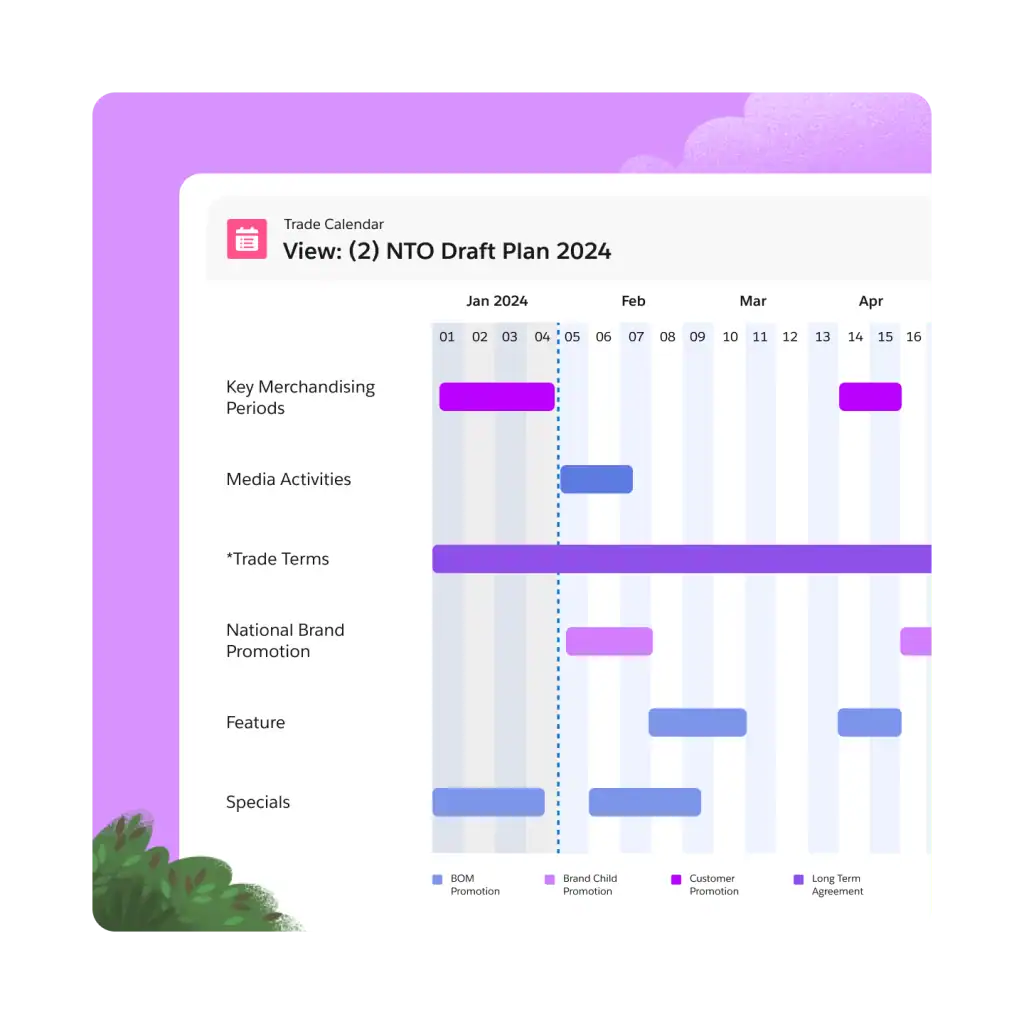
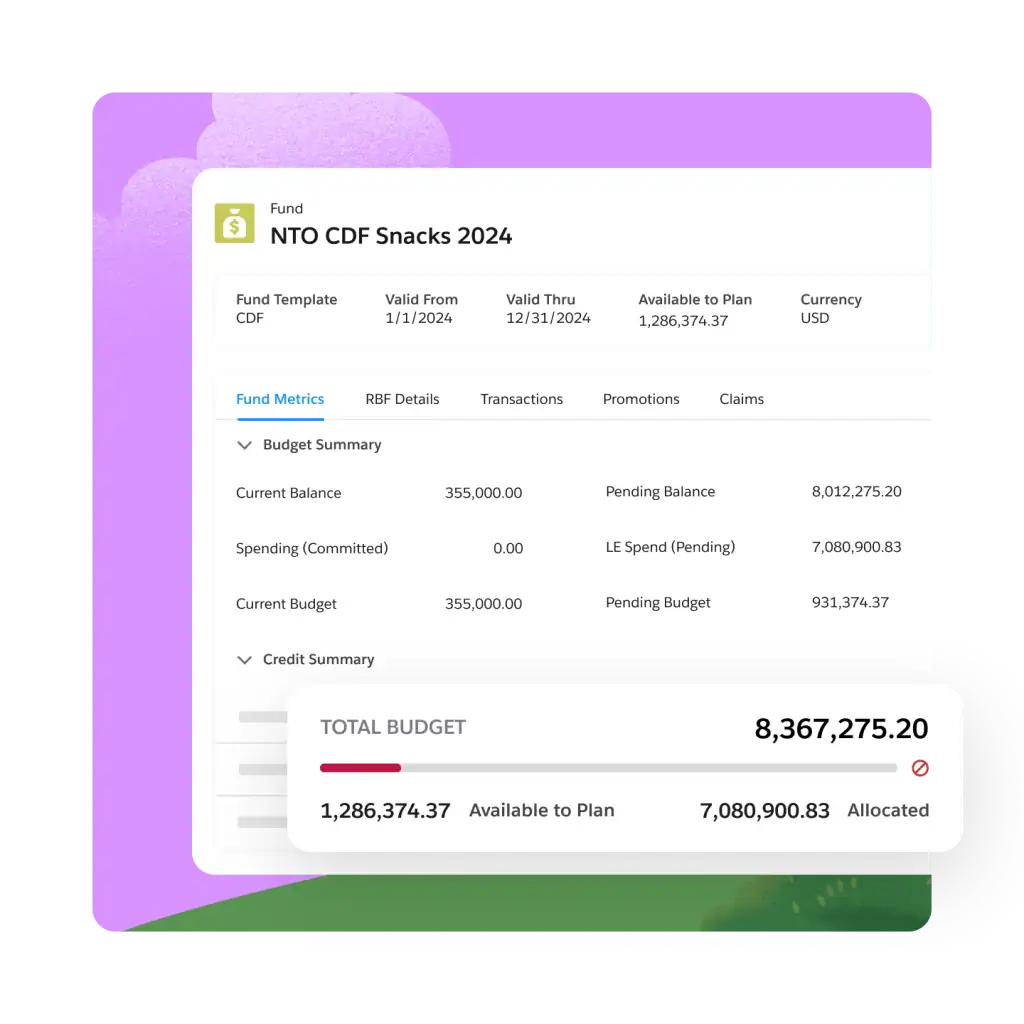
Trade Promotion Management (TPM) plans, funds, executes and measures the promotions a brand runs with its retail customers. Teams build promotions on a shared trade calendar, fund them from budgets and checkbooks, track claims and accruals as liabilities are incurred, and compare the results with the plan, all tied to the customer business plan.
Salesforce's TPM page lists promotion simulations and templates, trade calendars, a consolidated checkbook and budget management, rate-based funding, claims and accruals management, long-term agreements, performance promotion analytics and a joint business tracker. A TPM data model and connector bring TPM metrics from Hyperforce into Data 360 for wider analysis.

Key account planning
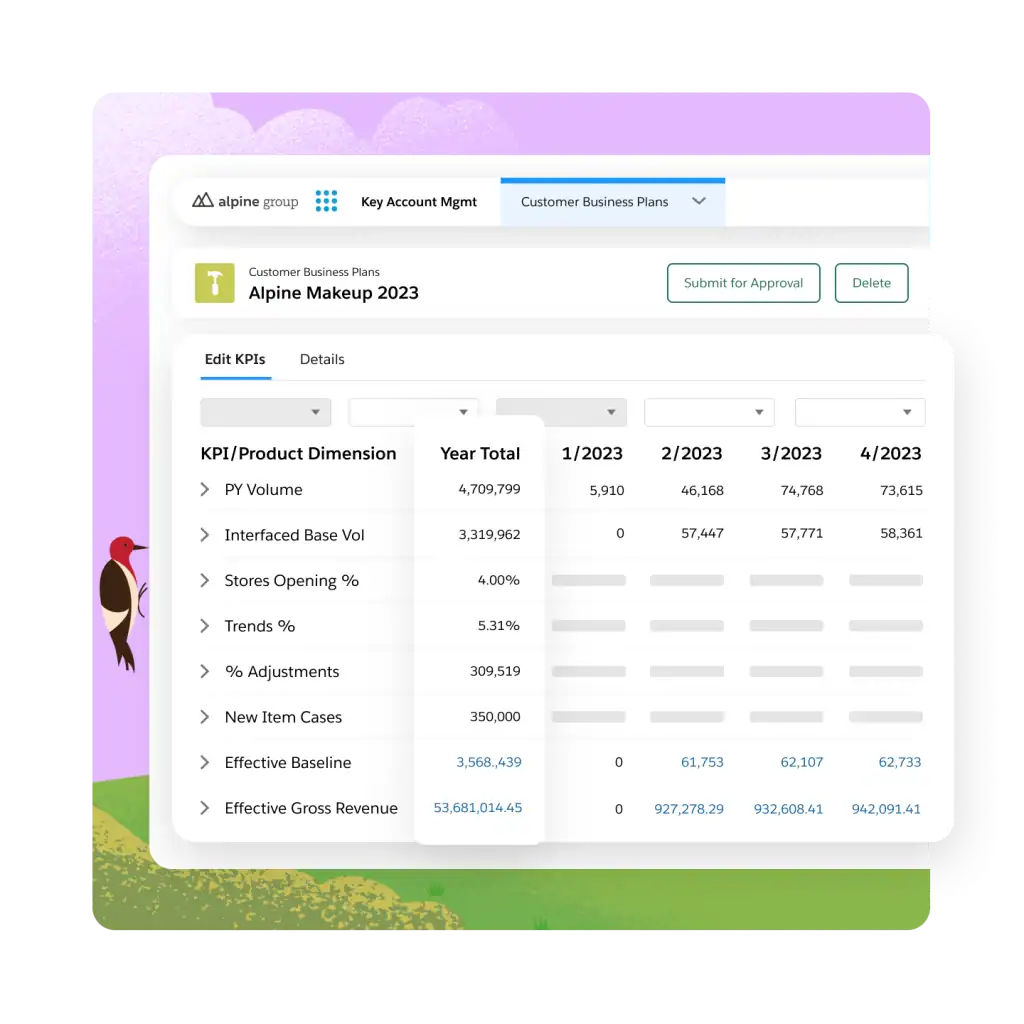
Customer Business Planning lets key account managers run volume, cost, baseline management and target planning from one unified customer business plan, and review performance against actuals by region, customer or SKU. Optional Trade Promotion Optimization, generally available since November 2023, uses Einstein Discovery to predict baselines and post-promotion uplift.
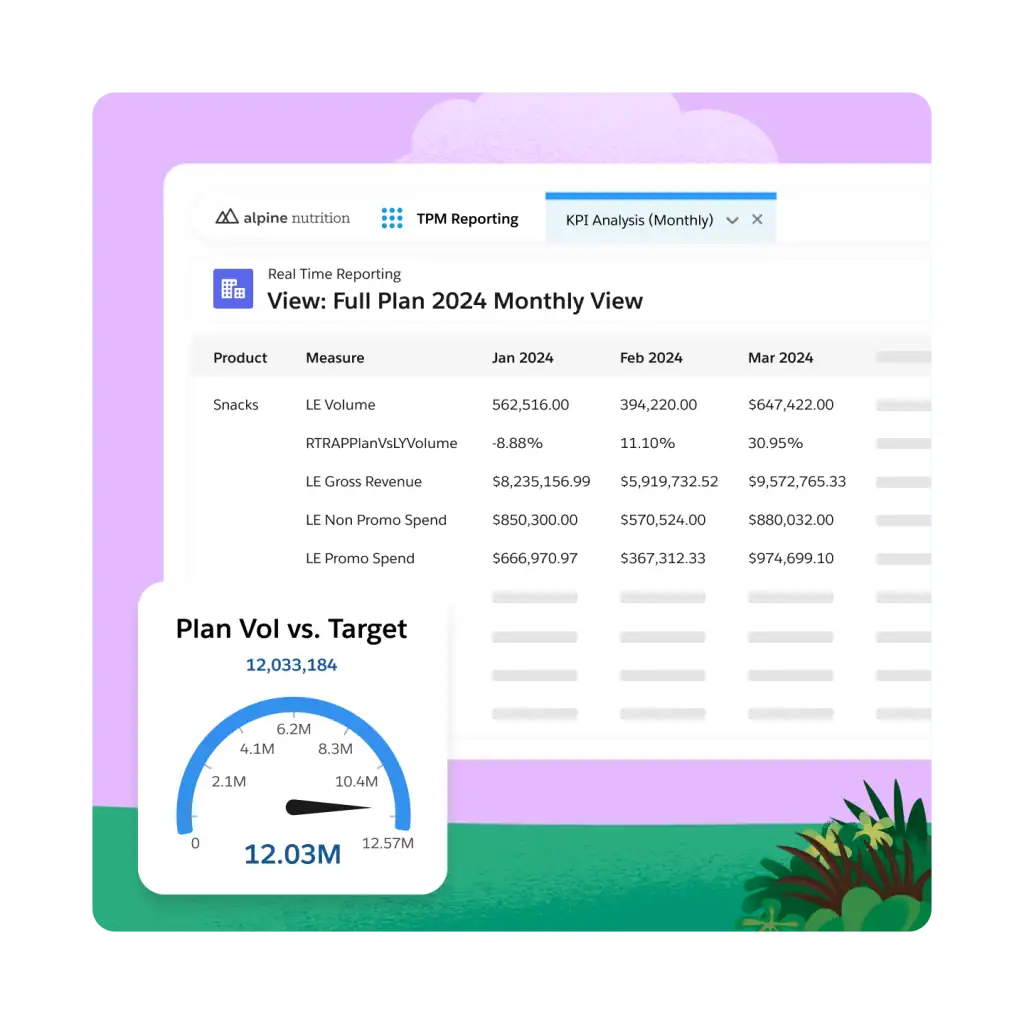
TPM is priced separately, through Salesforce sales on an annual contract, and it is usually the longest workstream in a Consumer Goods Cloud program because it depends on clean product, price, customer hierarchy and shipment data from the ERP.
How Does Consumer Goods Cloud Support Service and Telesales?
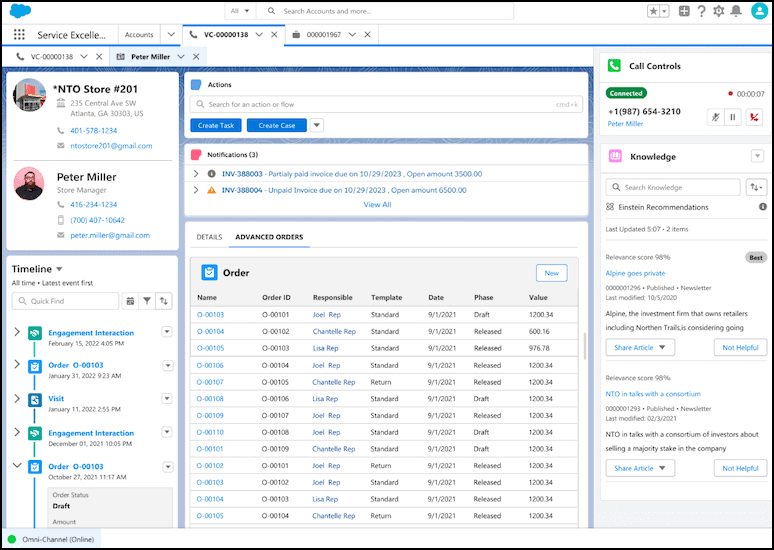
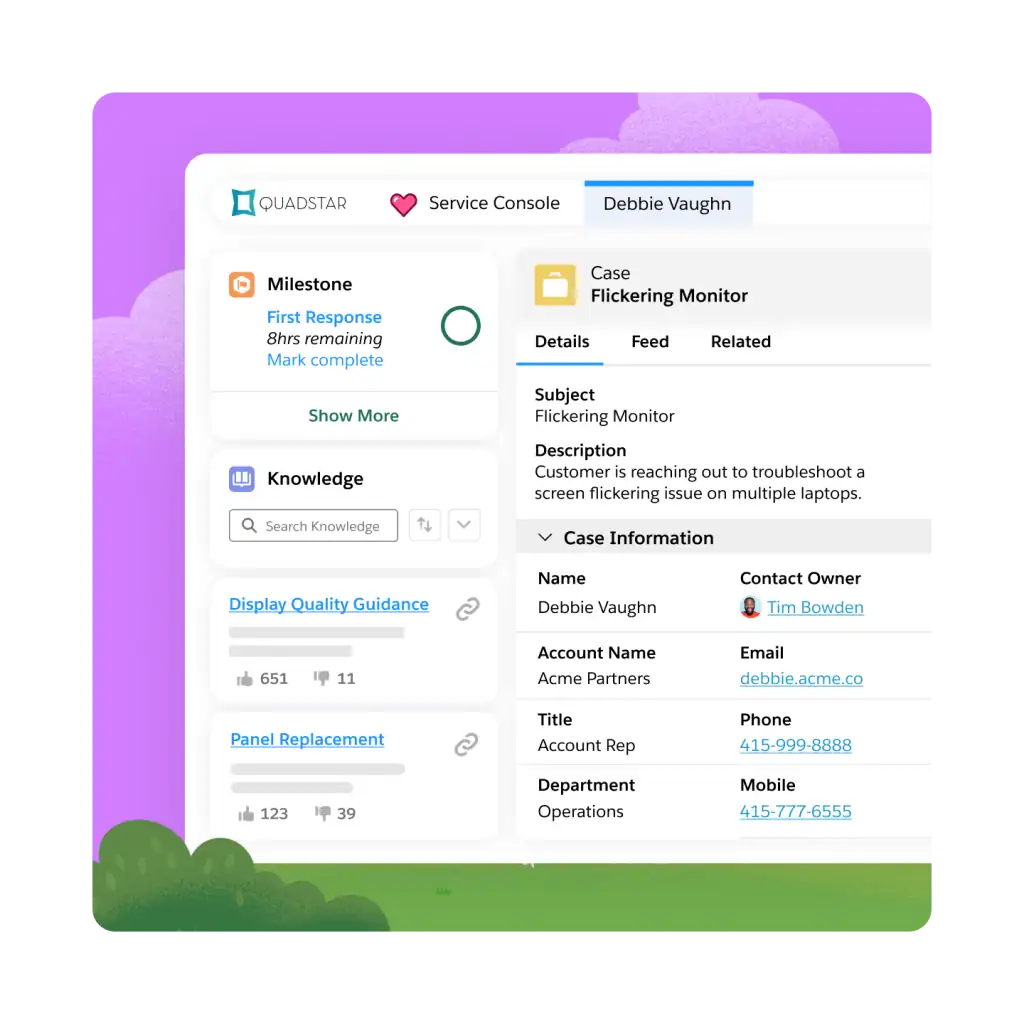
Consumer Goods Cloud for Service gives agents a console with each store's visits, orders and engagement history, and lets them take orders over the phone. Omni-Channel routing sends cases and other queued work to the right agent, and telesales agents build orders priced by the Penny Perfect Pricing engine, so promotions apply the same way they would in the field.
Salesforce's service pricing page lists telesales, the Penny Perfect Pricing Engine, asset service and warranty management in Service Core. Asset service matters for brands that place equipment such as coolers or dispensers in stores. Note that Winter '26 retired Penny Perfect Pricing V1 in favour of V2, so older implementations should plan that move.
What Objects Make Up the Consumer Goods Cloud Data Model?
The data model centres on the retail store, the visit and the tasks done during a visit, linked to business accounts, products and promotions. These are standard Salesforce objects, most available since API version 47.0, so admins can report on them, extend them and automate them with Flow like any other object.
| Object | What it represents |
|---|---|
| RetailStore | A physical store, linked to a business account (the retailer or chain) |
| RetailStoreGroup | A group of stores, for example by banner, format or region |
| Visit | A field rep's visit to a retail store |
| AssessmentTask | A planogram check, inventory check, promotion check, in-store survey or custom task during a visit |
| StoreProduct and InStoreLocation | Products carried by a store, or by a location inside it |
| Assortment and StoreAssortment | The product lists a store or group of stores should carry |
| Promotion, PromotionProduct, PromotionChannel | Promotions and the products and channels they apply to |
| RetailStoreKpi and RetailVisitKpi | Targets per store group, and the actuals captured during visits |
| DeliveryTask and SignatureTask | Delivery and sign-off steps for direct store delivery |
Object definitions come from Salesforce's Retail Execution developer guide. Two design choices shape every implementation: how the store master links to your ERP's ship-to and sold-to customers, and how assortments are maintained. Get both right before you build visit templates.
What Does Agentforce Add to Consumer Goods Cloud?
Agentforce for Consumer Goods adds prebuilt AI agents and skills for sales planning, retail execution, account management, upsell, asset service and inventory. They run on your Consumer Goods Cloud data and can be customised with Agentforce Builder. It is sold as an add-on, listed from US$150 per user per month in October 2026.
Salesforce announced Agentforce for Consumer Goods in April 2025 as a library of prebuilt skills for service, sales and field teams, covering customer service, telesales, visit management, proactive maintenance and sales agreement management. Its consumer goods AI page now lists prebuilt subagents for sales planning, retail execution, account management, product upsell, asset service and inventory management.
Visit Assistant
Released in Spring '26: account performance and product upsell insights for reps in the mobile app, plus help with visit scheduling and account summaries.
Trade Promotion Management Agent
Listed on the product page to help trade teams plan and manage promotions. Winter '27 also adds an AI coding assistant to define and customise promotions.
Agents in the mobile app
Summer '26 added an agent sidebar to the Consumer Goods Cloud mobile app on tablets, so field users can work with agents during a visit.
Two cautions. First, agents are only as good as the visit, order and promotion data underneath them, so data quality comes before AI. Second, Salesforce notes that some prebuilt capabilities may not be available yet, so confirm availability for your edition and region before you plan around one. Our Agentforce agent development team scopes this with you.
What's New in Consumer Goods Cloud in 2025 and 2026?
The main changes are Agentforce agents, Retail Execution moving onto standard platform objects, Data 360 integration, a newer pricing engine, and better TPM analytics. The 2024 version of this article described the Winter '21 release. The table below replaces it with the releases that matter for a project planned today.
| Release | What changed | Why it matters |
|---|---|---|
| April 2025 | Agentforce for Consumer Goods launched as a library of prebuilt agent skills | AI for telesales, visits, maintenance and sales agreements |
| Winter ’26 | Push upgrades for the managed packages; Data Cloud One with a Consumer Goods data kit; Penny Perfect Pricing V1 retired for V2; TPM accruals | Plan the pricing engine move; unify data across orgs |
| Spring ’26 | Retail Execution Visit Assistant; cancel uncompleted visits and orders; Named Query Analyzer; Case and Order objects in the mobile app; TPM data connector installed automatically | AI insights in the field; leaner offline sync |
| Summer ’26 | Agent sidebar in the tablet app; Tableau Next dashboards deployed with Salesforce Go; TPM promotion and tactic analysis dashboards | Faster analytics setup for trade and field teams |
| Winter ’27 | Retail Execution on the Salesforce Platform; connection to B2B Commerce through shared orders and pricing; Enterprise Territory Management; Retail Execution Connect APIs; Penny Perfect Calculator; TPM Calculation Insights and an AI coding assistant for promotions | New architecture choice for retail execution; distributor and B2B ordering on one price |
Release names and features come from Salesforce's release notes for each release. The April 2025 date comes from Salesforce's launch announcement. Check the release notes before you rely on any feature, because Salesforce adds and renames features between releases.
How Much Does Salesforce Consumer Goods Cloud Cost?
List prices start at US$100 per user per month for a Retail Execution merchandiser and reach US$700 for the Sales or Service Max editions, billed annually. Trade Promotion Management is quoted by Salesforce sales on an annual contract. Most companies mix editions by role, so the real cost depends on how many people do each job.
| Edition | List price (US$ per user per month, billed annually) | Typical user |
|---|---|---|
| Retail Execution: Merchandiser (Enterprise) | 100 | Merchandisers: visits, inventory tracking, Salesforce Maps |
| Retail Execution: Field Sales (Enterprise / Unlimited) | 225 / 400 | Field reps: adds visit recommendations and mobile order capture |
| Retail Execution: Strategic Sales (Enterprise / Unlimited) | 350 / 525 | Strategic and key account field roles |
| Consumer Goods Cloud Sales: Core / Advanced / Max | 275 / 450 / 700 | Account and sales teams; Core includes forecasting, sales agreements, targets and telesales |
| Consumer Goods Cloud Service: Core / Advanced / Max | 275 / 450 / 700 | Service and telesales agents; Core includes Penny Perfect Pricing and asset service |
| Trade Promotion Management | Contact sales (annual contract) | Trade marketing, key account and finance teams |
| Add-ons | Agentforce for Consumer Goods from 150; Consumer Goods Cloud Intelligence from 220 | AI agents; analytics |
Prices are the list prices shown on Salesforce's Retail Execution, Sales, Service and TPM pricing pages on October 27, 2026. Salesforce states they are for information only and subject to change. A 30-day free trial is available from the product page.
Which Salesforce editions does it require?
The Retail Execution permission set licences are available in Lightning Experience in Enterprise and Unlimited Editions that have Consumer Goods Cloud enabled, according to Salesforce's licence documentation. The licences map to roles: Lightning Retail Execution Starter for field sales users, Plus for strategic sales users, Merchandiser for merchandisers and Contractor for contractors, with separate licences for Penny Perfect Pricing and direct store delivery.
How Do You Implement Consumer Goods Cloud Successfully?
Start with one persona and one process, usually field visits or key account planning, connect the ERP master data first, and pilot with a small team before rolling out. Consumer Goods Cloud is configuration-heavy rather than code-heavy, but its value depends on store, product, price and shipment data that live in other systems.
Common pitfalls
For ERP and distributor data, our Salesforce integration services and MuleSoft integration pages explain our approach, and our guide to integrating Salesforce with your ERP using Celigo walks through a typical order and inventory sync. To unify consumer goods data across orgs, see our Salesforce Data 360 services.
How Does Twopir Consulting Help with Consumer Goods Cloud?
Twopir Consulting implements, rescues, optimizes and integrates Consumer Goods Cloud for growing and mid-market companies and for enterprise brands. We have delivered several Consumer Goods Cloud implementations, led by senior consultants, and we map your processes to out-of-the-box features first, adding custom development only where a process needs it.
- Implementation: scoping by role and edition, data model design, visit templates, KPIs, TPM setup and mobile rollout.
- Integration: ERP, distributor and data platform connections with MuleSoft, Celigo and other integration tools.
- Optimization and rescue: reviewing a stalled or underused org, offline sync performance, and the Penny Perfect Pricing V2 move.
- AI readiness: preparing data and processes before you switch on Agentforce for Consumer Goods.
See our Consumer Goods Cloud services for details. We help growing and mid-market companies solve complex CRM, integration, and business system challenges.
The Bottom Line
Salesforce Consumer Goods Cloud is the most complete way to run key accounts, trade promotions, store visits and service for a consumer goods brand on Salesforce, and it is changing fast: Agentforce agents, Data 360 and an on-platform Retail Execution all arrived in the last two years.
- 1
Choose editions by role: merchandisers, field reps, key account managers and agents need different licences.
- 2
Design the store, product and assortment master before you configure visits.
- 3
Integrate ERP and distributor data early, especially if you plan to use TPM.
- 4
Check the Winter '27 platform version of Retail Execution and the Penny Perfect Pricing V2 move before you design.
- 5
Add Agentforce once visit, order and promotion data is clean.
Plan Your Consumer Goods Cloud Rollout
Tell us how your field, key account and trade teams work today. We will map the editions, data model and integrations your rollout needs, and the order to build them in.
Schedule a Discovery CallFrequently Asked Questions
Salesforce Consumer Goods Cloud is Salesforce's industry CRM for brands that sell through retailers and distributors. It adds a consumer goods data model, retail execution with an offline mobile app, trade promotion management, key account planning and service tools to the Salesforce Platform, and it includes the core of Sales Cloud and Service Cloud.
Yes. Salesforce's consumer goods industry page and Trailhead now use the name Agentforce Consumer Goods, while the US product page and the release notes still say Consumer Goods Cloud. It is the same product. Agentforce for Consumer Goods is also the name of the AI add-on that provides prebuilt agents.
In October 2026, list prices ran from US$100 per user per month for a Retail Execution merchandiser to US$700 for the Sales or Service Max editions, billed annually. Field Sales starts at US$225 and Sales or Service Core at US$275. Trade Promotion Management is quoted by Salesforce on an annual contract.
Salesforce's documentation states that the Retail Execution permission set licences are available in Lightning Experience in Enterprise and Unlimited Editions that have Consumer Goods Cloud enabled. Users are then assigned role-based licences such as Lightning Retail Execution Starter for field sales or Merchandiser for merchandisers.
Yes. The Consumer Goods Cloud mobile app for iOS and Android is built for offline retail execution, so reps can complete visits, audits, surveys and orders in stores with poor signal and sync later. Since Spring '26 it also supports cases and orders online and offline.
No. Salesforce says you do not need other products to run it, because Consumer Goods Cloud includes the best of Sales Cloud and/or Service Cloud plus its extended data model. Add-ons such as Agentforce for Consumer Goods, Consumer Goods Cloud Intelligence or Trade Promotion Management are bought separately.
In Winter '27, Salesforce introduced Retail Execution on the Salesforce Platform. It runs on standard Salesforce objects instead of the managed package architecture, starting with merchandising on desktop and mobile and order taking on desktop. The release also connects Consumer Goods Cloud to B2B Commerce and adds the Penny Perfect Calculator.
