
Fragmented sales data, 35% pipeline growth — how a US FinTech rebuilt its revenue engine with Salesforce CPQ and multi-tool integration
A North American FinTech company with 250 employees was losing pipeline velocity to manual lead research, disconnected engagement tools, and no unified view of their sales funnel. Twopir restructured their entire sales tech stack — connecting Salesforce CPQ, Outreach, Apollo.io, and Zapier — and delivered measurable results within a single quarter.
in first quarter post-launch
with Apollo.io enrichment
prioritization work
from tailored Outreach sequences
via Salesforce automation
- Active Salesforce Sales Cloud org — existing setup, even if underutilised or inconsistently adopted
- Sales team of 10+ reps — enough rep volume to justify automated routing and sequencing logic
- An outreach tool in use — Outreach, Salesloft, or similar; we'll connect it properly to Salesforce
- Lead or contact data in Salesforce — even messy or duplicated; Apollo.io enrichment will clean and segment
- Willingness to define ICP criteria — firmographics, engagement signals, and buying intent thresholds for scoring
- Exec buy-in for process change — adoption requires sales leadership to enforce new workflows post-launch
- How to connect Apollo.io to Salesforce without introducing duplicate records or overwriting good data
- How to build multi-touch Outreach sequences that sync engagement data back into Salesforce activity records in real time
- How to automate lead scoring and routing so high-value prospects reach the right rep within minutes, not hours
- How to build a unified pipeline dashboard that consolidates Salesforce, Outreach, and Apollo.io into one view for managers
- How to use Zapier to eliminate cross-tool admin — notifications, enrichment triggers, and sequence start rules across all platforms
- How to run a diagnostic audit before any implementation to find bottlenecks before writing a single line of Salesforce configuration
A fast-growing FinTech with 250 people and a sales stack that hadn't kept up
By the time they engaged us, this FinTech company had all the right tools in theory — Salesforce, Outreach, a prospecting subscription — but none of them were talking to each other in a meaningful way. Reps were pulling contact lists from spreadsheets, running sequences in Outreach without those activities ever writing back to Salesforce, and manually deciding which leads to prioritise based on gut feel rather than data. The result was a sales team that was working hard but operating at well below its potential.
Their mission — giving small and mid-sized businesses real-time financial insights and automated reporting — was genuinely differentiated. The market opportunity was there. What was missing was a Salesforce CPQ-backed revenue engine that could turn inbound and outbound interest into predictable, measurable pipeline. We'd seen this pattern before across our US SaaS and FinTech engagements — good product, broken commercial infrastructure.
Three operational gaps directly costing pipeline and rep productivity
The diagnostic audit in Phase 1 surfaced three interconnected failure modes. Each was costing the team time and revenue independently — together, they were compounding into a serious drag on growth.
Inefficient prospecting eating rep time
Sales reps were spending 2–3 hours per day on manual lead research — searching LinkedIn, cross-referencing company websites, and manually entering data into Salesforce. There was no automated enrichment, no consistent segmentation, and no way to identify which prospects matched their ICP without doing the research from scratch. Low-priority prospects consumed as much rep time as high-value accounts because there was nothing to distinguish them at the top of the funnel.
Engagement data scattered across disconnected platforms
Outreach was running sequences and capturing email opens, clicks, and reply data — but none of that was writing back to Salesforce in any structured way. Sales managers couldn't see sequence performance alongside pipeline stage, so forecasting was based on opportunity fields that reps updated manually and inconsistently. Reporting could take 2–4 days of data wrangling before a reliable number reached leadership for a weekly review.
Manual lead scoring with no routing logic
Leads coming into Salesforce had no scoring model applied. Reps either cherry-picked familiar names or worked through the list top to bottom regardless of signal quality. There were no weighted parameters, no intent-based triggers, and no automated routing rules to direct high-value inbound to the right rep quickly. Follow-up delays of 24+ hours were common on leads that, with proper scoring, would have been flagged for immediate outreach.
No unified view for pipeline management or executive reporting
With data living in Salesforce, Outreach, Apollo.io trial data, and spreadsheets simultaneously, there was no single dashboard that told the full story of pipeline health. Managers made decisions based on partial information. Forecasting accuracy suffered because the system of record (Salesforce) was always behind what was actually happening in sequence tools and manual logs.
How We Structured the Engagement
We approached this the same way we've approached similar Salesforce CPQ and sales operations engagements for US-based SaaS and FinTech clients — workflow first, configuration second. Before we touched a single Salesforce field or wrote a Zapier workflow, we needed to understand exactly where the process broke down and why the existing tools were underperforming.
The engagement was structured across three phases: a diagnostic audit, a hands-on implementation sprint, and a refinement-and-enablement close. For this FinTech client, the full engagement ran approximately 10 weeks from kickoff to handover.
Diagnostic Audit — map the real bottlenecks before touching the tools
Salesforce CPQ implementations fail when they're built on top of broken processes rather than replacing them. Our first step was a structured audit of the entire tech stack: what was in Salesforce, what Outreach was capturing, how leads were entering the system, and where the handoffs between tools broke down.
Implementation & Automation — build the integrated sales engine in Salesforce
Phase 2 was the core build. We configured Salesforce Sales Cloud as the central system of record, then connected Apollo.io, Outreach, LinkedIn Sales Navigator, and Zapier around it. Apollo.io enrichment was set to run automatically on new leads entering Salesforce — pulling verified contact data, firmographics, and company intelligence into standard Salesforce fields without rep intervention.
Refinement & Enablement — optimise, train, and hand over a system that holds
The third phase is where most implementations run out of steam — the tools are live, but adoption is patchy and the scoring rules haven't been calibrated against real data yet. We ran structured enablement sessions for the sales team covering the new Outreach sequence cadences, the Salesforce lead scoring logic, and how to read the unified pipeline dashboards.

Is your sales team running sequences in one tool while your pipeline lives in another?
We'll audit your current Salesforce and outreach stack in 5 business days — map every gap, score every integration risk, and give you a prioritised fix list at no cost.
What Changed — In Numbers and in Practice
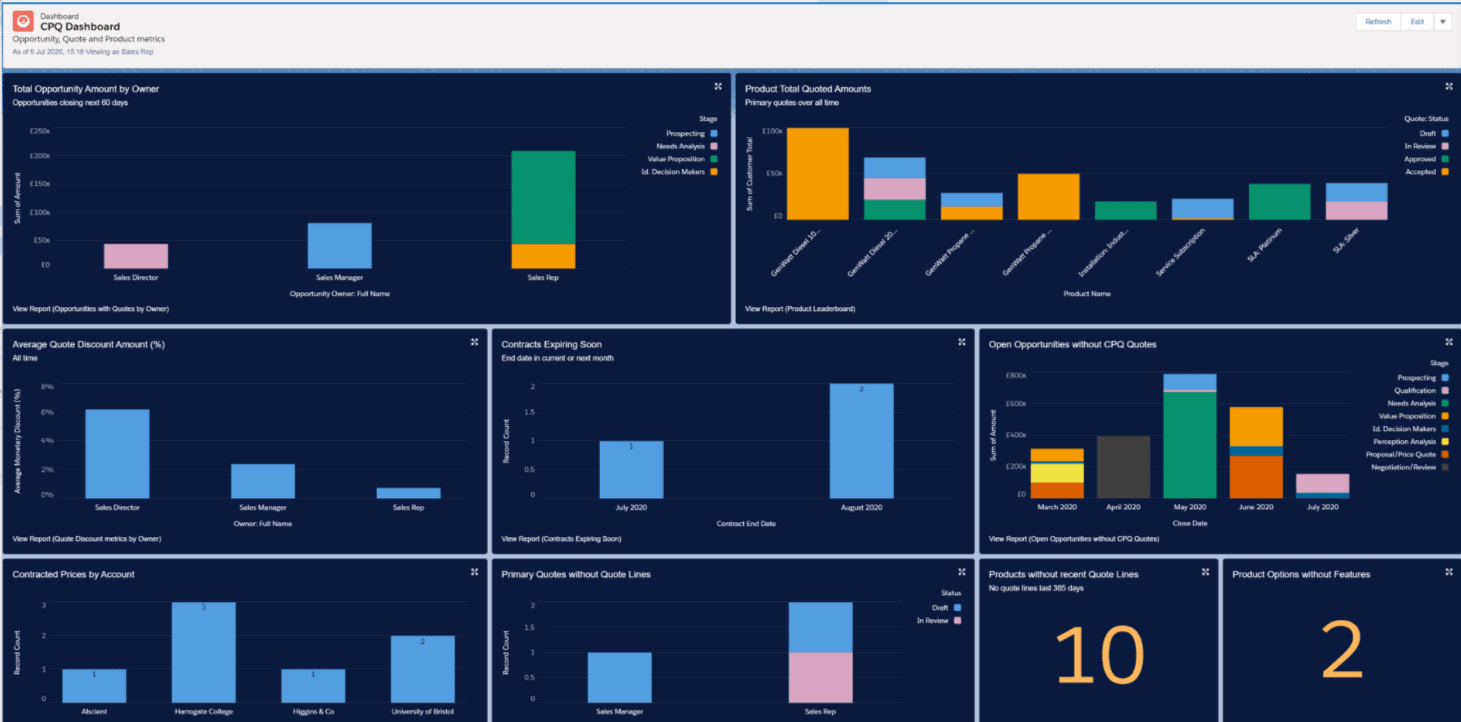
The metric that stuck with the client's VP of Sales wasn't the pipeline number — it was the first Monday morning meeting where the team reviewed a dashboard that showed Outreach sequence performance, Salesforce pipeline stage, and Apollo.io lead scores all in one view, without anyone spending the weekend pulling data into a spreadsheet.
"The tools were all there — Salesforce, Outreach, Apollo.io — but they were islands. Once we connected them properly and built scoring logic that actually matched how the team sold, the whole operation shifted from reactive to intentional. The pipeline number was the outcome, not the goal."
— Twopir Project Lead · US FinTech Sales Operations · 2025Salesforce CPQ and multi-tool integration — your questions answered
Related Case Studies

Your sales stack has the right tools. We'll make them actually work together.
Twopir has rebuilt the Salesforce + Outreach + Apollo.io integration for 50+ US FinTech and SaaS sales teams. Free audit, prioritised findings in 5 business days, no commitment required.
Serving US · UK · Australia · UAE · Canada · US EST · UK GMT · AEST coverage · Response within 24 hours guaranteed
